Bookmark 1.1:
The Psychology of the Video Game Backlog
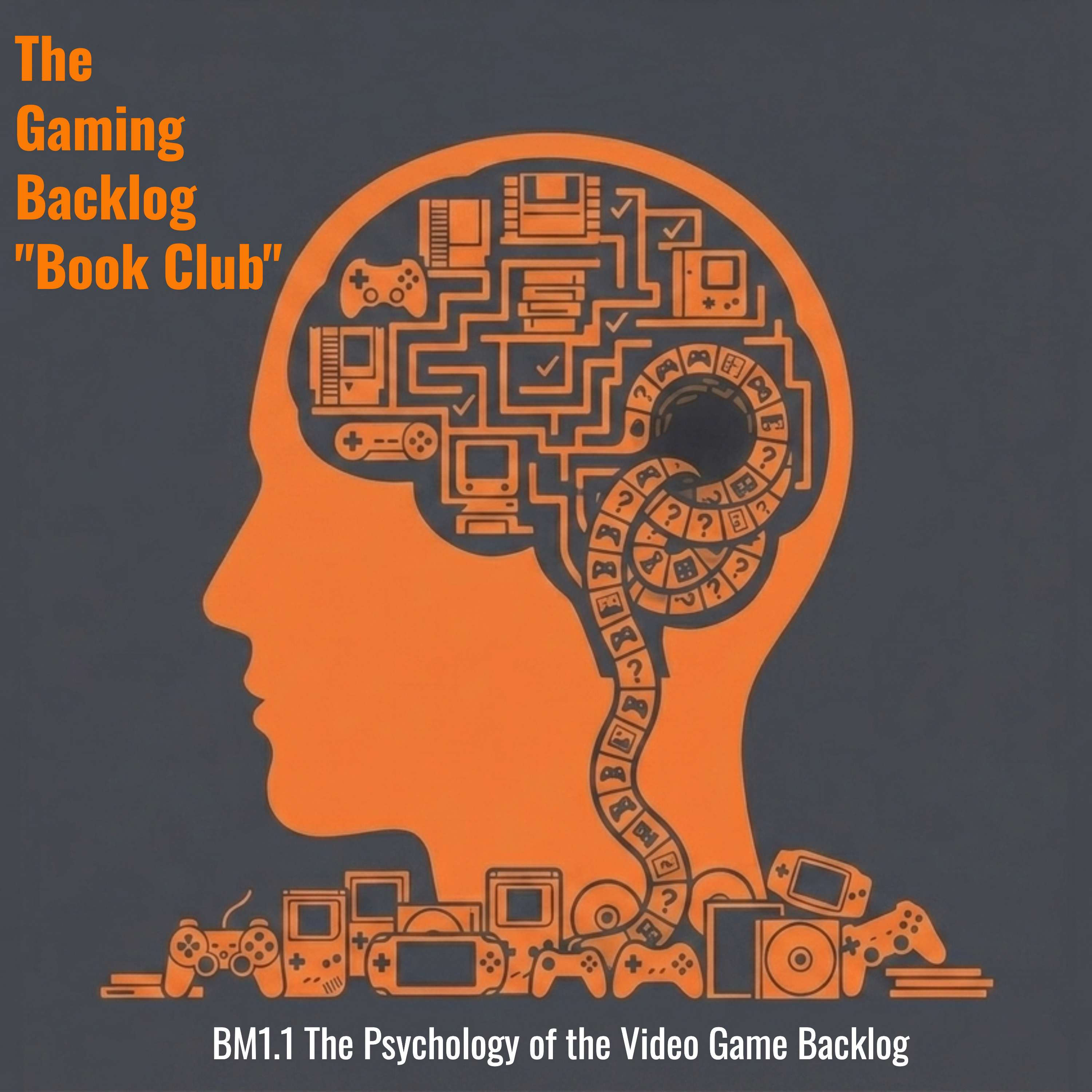
The 50th episode of The Gaming Backlog “Book Club” features the hosts chatting about the psychology of the video game backlog in the first ever Bookmark episode. Join us as we discuss backlog anxiety, Steam sales, FOMO, the paradox of choice, the pile of shame, and most importantly, some practical strategies to enjoy the backlog rather than see it as a burden. Do you have a backlog that seems like it’s growing significantly faster than it’s shrinking? Let us know how you feel about it!
Tune in next time to continue our current season about Prince of Persia: The Lost Crown.
Take part in our conversation by joining The Gaming Backlog “Book Club” Discord server at https://discord.gg/9xdX3znWQn or finding it through our LinkTree link on Instagram.
Transcript
[00:00:00] Speaker A: Hello and welcome to a special episode of the Gaming Backlog Book Club.
We have hit a bit of a milestone here. This is our 50th episode, which is kind of crazy and awesome to say out loud.
[00:00:14] Speaker B: It’s really awesome and it is crazy. I feel like I’m so proud of us that we got the 25, but we got the 50.
[00:00:20] Speaker A: When you start a podcast, you just kind of try it out and see what happens. And I, yeah, I mean I didn’t expect us to cool quit or early on or anything, but hey, you know, good for us.
I’m excited about it. I’m ready to see the second 50 and get to 100 episodes.
[00:00:38] Speaker B: Oh yeah, I’m excited to keep going and thank you everybody who’s been here with us since potentially day one or whatever. So yeah, since episode one.
[00:00:49] Speaker A: Happy to continue growing this community and especially on discord and love having conversations with you all and thank you for joining us along. And to celebrate that, we are introducing a new type of segment that will mix in with our regular book club seasons every once in a while.
[00:01:06] Speaker B: This is our first ever bookmark episode. Every once in a while, life responsibilities overtake the time that otherwise would be used to advance far enough in the week’s segment of the book club season to actually complete it and have the conversation we want about it.
So in those moments, we’ve decided to put a bookmark in the game for just long enough to touch on other topics related to our shared loved hobby of playing video games and discussing them.
This week we’ll be talking about the psychology behind the video game backlog, why backlogs exist in the first place, and the anxiety that can sometimes manifest as a result of having one.
[00:01:46] Speaker A: So let’s see where to begin, I guess loosely relevant to this discussion. I have a degree in psychology, actually, which I loved what I was studying but did not pursue as a career. In the end, the farthest I went down that path was working for a year in a research lab in the field of social and personality psychology.
So first off, a quick disclaimer here that in no way is anything we say here in any way, or any kind of medical advice. Any suggestions we make are purely coming from us as gamers.
That said, as I have loved video games since an early age, as have you, Alex, and then spent time in that research lab, a couple connections sprang into my head.
While in theory, playing single player video games can be a somewhat isolated and or isolating experience, and detractors of the industry often point to playing video games as relating to antisocial behavior. In reality, it can be a great social connector, as it is in our community here. And as it was on the playground back in elementary school, it was even in chasing and recapturing that very experience of social connection and shared joy for something that led us to create this podcast and the Connected Discord server in the first place.
So we say, to hell with all that negative commentary. This has been a great experience so far, and we look forward to even more conversations and connections.
Alex, wouldn’t you say you found many friendships specifically because of gaming?
[00:03:04] Speaker B: Oh, yeah, definitely. I have found. Yes, I have found quite a few friendships because of gaming.
[00:03:11] Speaker A: Yeah. I mean, you and I have a handful of other things in common as well, but I think video games really sealed the deal over anything else, right?
[00:03:18] Speaker B: Oh, yeah, definitely did.
[00:03:20] Speaker A: Because obviously, you know, my sports teams are just way better than yours, so that would never have made for a good friendship on its own.
[00:03:26] Speaker B: That’s debatable.
That’s definitely debatable.
[00:03:30] Speaker A: Yeah. Well, everyone has their own opinions in that world, as they kind of do here. Anyway, we’ll leave that for another day.
My teams are always better.
[00:03:40] Speaker B: Mm.
[00:03:41] Speaker A: So I have always been fascinated by what makes humans function or not as a society.
So I guess let’s touch on this concept of backlog anxiety. This psychological phenomenon of choice paralysis can be caused by these massive digital libraries and how it affects player retention, and even more commonly than that, players even starting a game in the first place.
I mean, look at trophies or achievements on consoles, and the percentage of people that have even beaten the first boss or completed the first story quest for tons of games is shockingly tiny. I think what activates someone in sort of that percentage is just starting the game, turns it on so they get counted as a number, and then, you know, you have to progress in order to be considered. And I guess, Alex, for someone like you who enjoys even getting a platinum trophy here and there, or whatever the hell it’s called on Xbox, would you say you’ve ever noticed the percentage of players to unlock that ever being in double digits?
[00:04:42] Speaker B: No, not usually, no.
[00:04:45] Speaker A: Like, I think there are probably some. Some occasions where they’re a super easy platinum trophy available.
[00:04:50] Speaker B: Super easy, yes.
[00:04:52] Speaker A: Like one where you just basically have to play the game and finish it and see the credits, and that’s the requirement for the platinum, like, that perhaps gets a bit higher. But, like, have you ever seen, like, a 50 platinum trophy?
[00:05:03] Speaker B: Probably not, no, no, no, I do not.
[00:05:07] Speaker A: Yeah. Yeah. I can’t imagine.
Probably not even 2020%. But hey.
Well, when did you first notice or realize that you were building up a backlog?
[00:05:21] Speaker B: Let’s see. I mean, a little.
Few years ago, really. I mean, I guess I’ve kind of known I’ve had a backlog of games, but I’ve also.
I was really bad for a while with video games where I’d start it, play it, and then just not finish it and maybe come back. And I still have that every now and then. Sometimes the game’s got to really hook me to get into it and then I will fully finish it. But usually ones that I haven’t finished, I go back to and do finish.
[00:05:51] Speaker A: Right. Or you’ll think you’re interested in it in the moment that you start it and then it doesn’t hook you immediately. So you just put it on the back burner.
[00:05:59] Speaker B: Yeah, that was one big example of that for me was Horizon zero Dawn. I started it. Yeah. The first one I played, I don’t know, first five, six hours and then was like not massively feeling it and then took a break for about, I don’t know, a couple months and then randomly just decided, I’ll start it back up.
I started from the point where I was at. I didn’t start the whole game over again because I kind of then like just went back, watched or like a little video just to get a recap.
And then after I started it back up, I couldn’t put it back down. And I put a hundred hours into the game. I couldn’t put it down.
[00:06:36] Speaker A: Yeah, I mean, that happens to me occasionally, I guess I’ll say too.
I think I’ve mentioned on here before, sometime around 2015 or so, I just completely stopped playing games for whatever reason for multiple years. And then in 2017, 2017, I got back into it and then got really back into it like maybe half a year later. But yeah, in 2015, I was maybe about less than like 40% of the way through the first, the last of Us. Like the original, not even Remastered on PS3.
Like, I had just passed like the sewer segment with the two brothers.
[00:07:23] Speaker B: Oh, yeah.
[00:07:24] Speaker A: So I had like gotten just past there and I think it was, you know what’s right after that, where you get to the East Color, Eastern Colorado University, I think so for some reason, like, and it’s not because of the game, because I was enjoying it well enough at that point, but I just had other things going on and stopped playing games and didn’t touch any video game for two years.
And then I was going to move and said, hey, I might as well just finish that. And obviously loved it. It’s a great finish to that game. And then replayed it at least once and played the Left Behind DLC and all that. And now I’m here doing a podcast about video games. So obviously it never disappeared, but kind of a weird kind of thing. But yeah, the backlog grew a lot during that period for me. Without even knowing it, like, I jumped back into games and said, what have I been missing this whole time? You know, picked up a PS4 and then, you know, you know, well enough, but I sort of built up this backlog of, like, there’s all these great things that came out during that time and then even since then that, you know, and now the backlog just keeps multiplying and multiplying infinitely.
[00:08:30] Speaker B: Yeah, I think just going back to. Yeah, I think for me, really, it was probably actually and probably happened to a few people, probably more when I was really paying attention was Covid. Because, I mean, didn’t have as much to do.
[00:08:42] Speaker A: Sure.
[00:08:43] Speaker B: And I was looking at it, it was like, I was like, oh, my God, there are so many games here. Like, and now I have a bit of time, like, I want to play.
[00:08:48] Speaker A: You started making some more progress through it then.
[00:08:51] Speaker B: A little more progress.
But I. I still have. I mean, not as much, but still sometimes have the habit of something new in Chinese come out that I gotta start immediately and play.
[00:09:00] Speaker A: You get distracted. Yeah. So, yeah, you fall off that game.
[00:09:03] Speaker B: Yeah. I would say 2020 is when I really noticed, like, okay, my backlogs, like, I was, like, looking through whatever, just catalogs and other things being like, okay, I really want to play that. I want to play that. I want to play that.
[00:09:13] Speaker A: Right. Yeah. I mean, I think about, you know, 10 games or 15 games right now that I really have a lot of desire to start. But then I also have, like, four that I’m juggling right now, which I don’t want to be juggling. I kind of prefer to play one game at a time, or at least one game per console at a time.
But no, it’s not possible. I guess. So.
Um.
So, yeah, I got two personal games and then two. Two for the book club, obviously.
[00:09:41] Speaker B: Yeah.
[00:09:41] Speaker A: But I guess. Okay, here’s a question. Did you ever consider the backlog a problem?
[00:09:47] Speaker B: No, I don’t think I ever considered it a problem. I think I just looked at it and be like, it’s growing and hopefully one day I’ll play these games.
[00:09:56] Speaker A: I guess so. There’s. There’s. There’s my next question. Are you like me? Definitely. At the point where you have many games in your backlog that you really realistically won’t ever play.
[00:10:05] Speaker B: There are, yes, there are definitely.
[00:10:07] Speaker A: I think it’s inevitable. Right?
[00:10:08] Speaker B: Yeah, there are definitely some. Like I look through.
Was it recently on my Xbox? Actually I think I did it on PlayStation 2.
I looked through like some of the games that I had installed there and I was like, I’m never actually going to play this. I just installed it. I was like, right.
[00:10:27] Speaker A: It’s just I’m so intrigued too. But many interesting, good, high quality, you know, indie Double A and AAA games out right now and they’re all getting, not all of them, but especially the AAA games keep getting longer and longer to get through. So there’s just no time.
And yeah, I guess that’s really why we end up.
You just take it as they come.
But yeah, I guess despite knowing there are games we already own that will never play, we’ll likely continue buying and acquiring new games that come out because we have more in them than the ones that have been around for a long time.
Like. So it requires a bit of, you know, restraint in some cases and I think, you know, we’ll touch on it a little bit some other points around that. But patience can be valuable. Being a patient gamer has its benefits for sure, in terms of price paid and all that kind of thing.
So yeah. So listener, picture this scenario and see how much it applies to your own situation.
Steam or your platform of choice is having a major sale. You have a wish list of games so you can quickly and easily see which of all of your wish listed options is discounted at the moment. You buy a critically acclaimed rpg, for example, during that sale. I’m using Steam sales as an example here because they are most notable for having massive quantities of great games on sale, even for as low as $2. Sometimes and quite frequently they put things discounted.
So you buy this game and maybe even more, adding more games to a digital mountain of unplayed titles and you experience the rush, the wave of anticipation that this game is going to kick ass and you’re going to love every minute of it and you’re stoked for it, but won’t play it right now because you’re already playing XYZ and having a great time.
And the reality of the 10, 50, 100 plus games sitting unplayed in your backlog settles back in. You just took advantage of the sale because who knows when it’ll be discounted that well again. Right.
But then a strange sense of guilt maybe arrives, replacing that excitement. Kind of like a pile of shame.
[00:12:27] Speaker B: Yeah, yeah.
[00:12:28] Speaker A: And it’s a fascinating look into how our brains handle choice dopamine and perceived obligations. At this point, the backlog isn’t just a list. It’s become a psychological burden.
[00:12:39] Speaker B: Yeah, exactly. And I mean, if you’re like us, whenever you buy a game on a PlayStation sale, it usually ends up becoming one of the free games of the month very soon after.
So for you, what was the last game that happened to you?
[00:12:51] Speaker A: Yeah, for me, the one I can definitely remember is Silent Hill 2 remake. Literally right after we finished that season of the podcast, it became available for free on PlayStation Plus. I had bought it, I think in a sale this summer, a couple months beforehand, and it became available while we were going through that season. So that’s not great, but it happens frequently. When was the last one for you?
[00:13:13] Speaker B: Mine is actually right now, like literally right now. Star Wars Outlaws. I bought Star Wars Outlaws whenever it was not too long ago, might have been at the beginning of the year or something went on and I bought the Ultimate Edition on a huge sale. Like it was discounted a lot.
[00:13:29] Speaker A: Yeah.
[00:13:30] Speaker B: And I was like, oh, I do really want to play this. And I bought it. And then I know it’s just the base game is now free, but still
[00:13:35] Speaker A: I was kind of like, that is a good point. I mean, I think that’s the one thing is that they obviously, whenever they launch an expansion or a DLC or maybe a sequel coming up, is a good time to not buy something, even if it’s on a good sale, because it’s almost a sign that they’re going to put it out. Because yes, they mostly put out for the free versions. They mostly give you the base edition of the name and any additions to it are. You can buy yourself. And sometimes, I guess that’s the thing. DLCs don’t often go on sale.
[00:14:05] Speaker B: No, they don’t. Not very often. I mean, sometimes, yeah, sometimes they’ll do specific seals where sales. Sales where it’s like a add on sale, where it’s like the season pass or occasionally.
[00:14:16] Speaker A: Yeah, I’ve seen it happen a couple times. But some games, like you never see the DLC on sale, so. But yes, it still probably makes more financial sense to hold on, get the game for free and then do the add on, even though you know, you don’t technically own any of these things if you’re not buying physical. But that’s, that’s all well and good, but yeah, didn’t. Did you also do that recently with Spider Man 2? Because Spider Man 2 just became free, too.
[00:14:39] Speaker B: Yeah, I did.
[00:14:40] Speaker A: Thank you for the. Remember.
[00:14:41] Speaker B: Yes, I bought Spider Man 2 on physical. I bought it physical during Black Friday because it went down to, I think it was 30 bucks or something. And I was like, oh, I don’t have it. And I was like, oh. And then. And during that time, that was $30. And on PlayStation, the, like, Deluxe Upgrade was on sale for, I don’t know, 10 bucks or a little less. So I just bought the base game and then I bought the upgrade. Oh, and then. Yeah, and the base game became free, like, two months later.
[00:15:12] Speaker A: I’ve seen the Spider Man 2 going on sale like, every handful of months for the last year or so and thought, yeah, I do want to play that game, but I have and have not. I have it, but have not started or played the Miles Morales game yet. So I was. I was just going to keep waiting until I actually go through and play that before I decide to spend money on Spider Man 2. And my restraint paid off and I ended up with, you know, a free copy.
So, yeah, that was my one win. I’m starting to develop a sixth sense for what’s about to go onto PlayStation
[00:15:44] Speaker B: 4 especially, I think if it’s a Sony game, the actual Sony games, they will at some point. They will. And so I just need to learn now. Unless it’s something.
[00:15:53] Speaker A: Unless it’s something you need to play Day one or, you know, month two or whatever.
[00:15:57] Speaker B: Like, like New God of War, New
[00:15:59] Speaker A: Last of Us or New Uncharted.
[00:16:01] Speaker B: Yeah, like the Uncharted or Intergalactic. When that comes out, I’ll probably play that. Right. But otherwise, if it’s not as much, then I think I’ll just wait because, you know, it’ll come free for sure. Maybe not for another year or two, but it’ll come free.
[00:16:14] Speaker A: Which doesn’t sound great for, you know, something like, I really want to play Wolverine, but I suppose should play Miles Morales and then Spider Man 2 and then wait for that. But once that’s free, it’s going to be, you know, 2030, but whatever, there’s enough of a backlog to get through.
[00:16:29] Speaker B: Oh, yeah, there is.
[00:16:30] Speaker A: So, yeah, there’s this carrot on a stick, right? And you have this optimism, this hope that someday, someday I’ll have the time to play every single one of these games, or someday I’ll be able to play this game I just bought at a really good price, but it may not happen. So I Guess why do we buy games we don’t know for sure if we’ll ever play or have time to play, even if we know we have the interest and want to play it. What do you think?
That’s a good point.
[00:17:00] Speaker B: To me, that’s probably.
[00:17:03] Speaker A: Yeah, it’s a what if. Yeah.
[00:17:06] Speaker B: Yeah.
[00:17:07] Speaker A: Well, one reason from the psychological perspective is that we buy games for the person we wish we were. And I definitely don’t mean that in an all encompassing type of person you want to be kind of way. I just mean the person with 80 free hours on a regular basis for an open world epic, rather than the person that we are who is the one with 30 minutes to play before bed.
[00:17:29] Speaker B: Yeah, I mean, beyond just your standard responsibilities of working or going to school, studying, homework, side gigs, side projects, exercise, taking care of kids or attending their activities, having a social life elsewhere, I mean, there are also an infinite number of other things vying for our attention in this day and age. So unless you choose video games as your number one form of entertainment, and even if you do, it’s unlikely you’ll have a chance to make tons of progress regularly.
[00:17:57] Speaker A: Exactly. Which leads to the question, why does this hobby of ours sometimes feel like a chore or a second job? Do you ever get that sensation?
[00:18:07] Speaker B: I had in the past? I haven’t as much recently I have actually been enjoying, especially with the podcast and everything and playing it like I’ve been enjoying it because it’s been putting me into games that didn’t think I’d ever get to and all. So I haven’t felt that sensation. Luckily, that’s good recently.
[00:18:24] Speaker A: Variety is a spice of life, they say. I suppose variety outside of video games as well, like mixing it up between hobbies is good too.
[00:18:31] Speaker B: That’s the other thing I’ve also taken up. Like I’ve become reading a lot more is another hobby of mine.
[00:18:35] Speaker A: So it’s like reading and you’ve been. Been playing. What’s that? Trading card games a little bit too, haven’t you? That helps.
[00:18:42] Speaker B: Yeah, a little other separate things that. Yeah. Just so I’m not just focused on one thing all the time, which is kind of nice. So.
[00:18:49] Speaker A: Yeah, and something, I mean, even something that I kind of just realized the other day is, you know, I love the gym and having exercise and I haven’t had enough of that over the last couple years, but mostly because of having a kid. But yeah, I guess I realized that even just now in playing Hades as our side quest. That’s still going because time.
Yeah, it’s I’ve realized one of my favorite ways to play Hades is to mix it in with a workout. So not like Ring Fit Adventure or Wii Fit or whatever. It’s, you know, I.
Hades is somehow perfectly optimized so that one room takes about the amount of time that a rest in between workout sets takes. So you can clear one encounter, do another set, play another encounter, do another set, and just go through a full run that way and you get a whole workout and you get a whole run in Hades. So surprisingly useful. Anyway, so, yeah, I mean, I. To me, does it feel like a short. Not necessarily, but I do end up feeling occasionally the. Oh, but there’s 20 other games I want to play. Maybe I should finish this faster so I can get to that one. Because I do want to, you know, see it through in a lot of cases.
[00:20:03] Speaker B: Yes. Yeah, I get that.
[00:20:05] Speaker A: I do have that attachment of like a bit of. I’ve started this. I don’t want to just drop it because I’m enjoying it, but I also want to see what’s next.
[00:20:12] Speaker B: Yep, that’s. I have that. I have that issue with video games and books. I’m reading a book or listening to an audible like an audiobook, but I’m looking forward to like, this is the next one and I want to get to it.
[00:20:26] Speaker A: And that’s like the. Yeah, the abundance of choice doesn’t help, right? Because you see, you do audiobooks. I have a handful of books on a shelf that I want to read, but where’s the time? But yeah, I mean, I guess I see on certain subreddits so constantly, to the point of probably at least once every time I log on that say I haven’t enjoyed any game I’ve played recently, recommend a game that will break me out of this. And if it does ever reach this point, it’s probably best to step away from gaming for a little bit, go engage in your other hobbies or do something completely different for a while and come back fresh. I can almost guarantee it’ll be much more enjoyable at that point.
[00:21:01] Speaker B: Oh, yeah, definitely. I agree.
[00:21:03] Speaker A: Also, as you mentioned, FOMO can obviously be a powerful instigator across many, many parts and moments of life. But between limited time offers and deep discounts, they trigger that fear of missing out, making a purchase feel like you’re wisely saving money rather than spending money.
And whether it’s a good deal or not, whether it’s discounted at all or full price, there’s this psychology of a purchase that gets in the way too There’s a dichotomy between the dopamine hit and the utility factor. Your brain gets a hit of dopamine from the acquisition of something new or sometimes even just the hunt of that something.
And oftentimes that dopamine kicks in more strongly for the purchase than it does for the actual gameplay itself. Can you think of a game that you were so excited to buy, then you started it up and it was just mediocre?
[00:21:52] Speaker B: Trying to think, if I’ve had one, I know I have.
Oh, man, I can’t right now. I can’t think. I don’t know if you have one. You go first and I’ll think.
[00:22:04] Speaker A: But yeah, I mean, yeah, foreign.
It’s hard for me to come up on those because I. I feel like we both have a fairly good sense of what we’re going to enjoy at this point.
[00:22:15] Speaker B: As I said, there are games I have started and I have stopped, but not because I feel they’re mediocre. It’s more of like. It’s like I’ve got into the game and it’s like. And I’ve gotten like a couple hours in and then I’m like, you know what? This isn’t the right time for me to play this type of game.
[00:22:29] Speaker A: Right. But maybe some other time.
[00:22:31] Speaker B: Yeah, but maybe some other time I will come back.
[00:22:33] Speaker A: Well, but nothing serious.
[00:22:34] Speaker B: Been like, like, this is not right. Can’t think of anything that’s been like, oh, this is not as good as. Yeah.
[00:22:40] Speaker A: Curious if anyone on Discord has any examples here that they’ve, you know, been excited, but it’s just not their thing. Okay, now, Alice, let me ask you another question. Before we started this podcast, how did you go about choosing the next game from your backlog you were going to play?
[00:22:55] Speaker B: It was kind of more just going through, looking through them and I sort of still do it this way of just like what I.
How I feel towards it and then also some influences. I watch a lot of YouTube, so if somebody’s like, if I see somebody talking about a couple older games, like a few different people, and I’ve. It’s been what I wanted to play.
[00:23:18] Speaker A: Right.
[00:23:18] Speaker B: I usually started like just recently Mass Effect.
[00:23:21] Speaker A: Yeah. Right. So it sounds like you have a bit of a well informed Netflix method where. You’ll see. Okay, I finished something. I’m ready to pick up something else. Let me just see what I’ve got in the library here.
And then you scroll, probably for not an unsignificant, insignificant amount of time, and then find something Right, Yeah. Obviously we both play games on our own as well and outside of the podcast. And I assume you choose them based on the gut feeling of which sounds like what you’re describing.
[00:23:50] Speaker B: Yes. Yeah.
[00:23:51] Speaker A: But unless a game, a specific game immediately pops into your head or immediately calls out to you, when you open up that library, you must be weighing a couple of options every time.
[00:24:02] Speaker B: Yeah, yeah, there. Yeah, there’s usually a couple options. Yes, there’s usually, yeah, one or two. Well, there’s at least two, sometimes three options.
[00:24:12] Speaker A: Sure, sure, sure, sure. Of course, yeah. So. And that’s expected.
So with that, we run into a bit of analysis paralysis.
This is based on the paradox of choice. So when we have 200 options, the cost of picking the wrong game feels higher. So we sometimes end up playing nothing or just another round of a comfort game, like an online FPS or a sports game or a cozy game.
This is exactly the same reason why people go onto Netflix or another streamer with no specific goal in mind to watch and just scroll endlessly, not feeling particularly enthusiastic about anything that they see in their list of options. And then after an extended period of searching, decide it’s best to just look at their phone for a while until they’re tired enough to sleep.
[00:24:55] Speaker B: Yep, that doom scroll, Doom scroll is
[00:24:59] Speaker A: no fun in the game backlog. No, on top of that, there’s decision fatigue. So after a long day of work decisions or studying, picking a new game if you’ve just finished a story game, for example, feels like another chore.
And finally, our backlogs come preloaded with the Sunk Cost Trap. So we often feel obligated to finish a game we aren’t enjoying to the fullest just because you paid for it or started it. But is that time spent not having true fun worth it?
Perhaps not.
Yeah, I mean, I touched on a little bit. I. I suppose I. Especially with longer, like, you know, 70 to 100 hour open world type games, I will, even though I will enjoy a majority of it, I’ll get to that sort of back third sometimes and really hang in there mostly for the story to see how the story wraps up. Because I love lore and I love the stories that are told in games and then. But run out of steam on just like wanting to actually do it. I do it anyway in most cases, but.
So I’m having fun unraveling the story, but not the pure joy that I had in the beginning of starting that game.
[00:26:08] Speaker B: Yeah, no, I understand that one.
[00:26:11] Speaker A: So, yes, there’s a number of things that kind of. We have to juggle with to get through this. And what can we do about it?
The first thing that comes to mind is shifting the mindset so we can move on from the idea of being a completionist to instead going back to being an enthusiast like we were when we were younger. And it was so easy to acquire and it was not so easy to acquire every video game under the sun back then.
So let’s kind of deconstruct this pile of shame a bit. Why do we feel shame about a library of entertainment? Entertainment at its core should be exactly that.
There’s no obligation there, but it does often feel like one because of that sunk cost.
But a backlog can instead become a reminder of what you don’t know and haven’t experienced yet, which can be seen as an invitation rather than a debt.
[00:26:59] Speaker B: Exactly. What we can also do is try to take a mental shift from treating our backlogs like a to do list of chores to thinking of them as a library of options that we have that we have the privilege to choose from instead of instead sorry, or a curated personal museum that you can visit whenever you want.
[00:27:20] Speaker A: And so there are some potential strategies we can try to implement that may or may not help, depending on how daunting this backlog and backlog induced stress or fatigue you may feel. One option is to only keep three games installed at once, or choose a small number and only install that many. So it’s like a living shortlist. You’ll know you have plenty more options out there, but are only reminded on a regular basis by these few that are in your view on your home screen. Most of us are probably well past this, with also costs sunken into expanding storage capacity with hard drives, et cetera. But it is a strategy that is likely to help the feelings here. While I don’t follow this myself due to lack of space, all of my physical games for PlayStation and Switch are either tucked away in a drawer or in a closet, which helped me a little bit. And there are five or so for each console out in the open where I can see them regularly. And I will say it has me constantly thinking about taking them off the backlog and starting them up. This is actually even a big part of why we’ll be playing Cyberpunk 2077 for an upcoming season. Because I see that bright vibrant yellow case right under my TV and have a constant, constant urge to play it.
[00:28:26] Speaker B: Oh yeah, same here. And I will say I for that. I have a big urge to play it too. Not just because of that. I’ve been wanting to play great things. But also the trading card game is coming out later this year and I have another good friend of mine who’s done like three playthroughs of Cyberpunk and is doing the trading card game. I wanted me to get into it with him, so I’m excited to for cyberpunk. That’s why I was happy we moved it up.
So yeah, another option that we can try is the 20 minute test. So if a game doesn’t grab you in 20 minutes, divorce it without guilt. However, I will revise this and say what is more likely to make sense for our audience is yes, if you have zero interest at all after 20 minutes, then bail. But if you’re intrigued enough to continue, at least complete the tutorial and ideally a small chunk of the post tutorial game, a first mission, or something along those lines. It may not expose you to any of the complexities of the gameplay or the story that may really grab you in the long run, but it’ll at least give you the vibe. Check that. You need to know if it’s right for you. Like right now.
[00:29:43] Speaker A: Now a reminder, gaming is for play, not for productivity. So option three is if the list is making you miserable, delete the list and just play whatever pops into your head that you remember that you have. Don’t look at the list like you look at Netflix or your favorite streaming service. Just remember a game you have installed. Find it and boot it up. See what happens.
[00:30:04] Speaker B: Exactly. Or option four is join one of the gaming backlog book club seasons. Even if it’s not a game? Yeah, even if it’s not a game. In a genre you would typically gravitate towards. Like me, we’re doing Metroidvania right now. Prince of Persia. Not mine, but enjoying it so far, and we mention it a lot here. A palate cleanser. A game can be very powerful indeed. Maybe something you didn’t think you’d ever play on your own becomes more entertaining when discussing it with others in our community. Or maybe you end up disliking it, but it’ll help you appreciate the next backlog game you did pick up even more. You never know what new interest you might find.
I know that may sound like an advertisement, but a you’re already here listening to us so an ad makes less sense, and b we’re really in it for the fun of playing great video games and having welcoming conversations about them.
[00:30:58] Speaker A: And we’ll leave you off with an anonymous quote. A backlog is just a menu. You don’t feel guilty for not ordering everything at a restaurant, so don’t feel guilty for not playing everything you own.
[00:31:10] Speaker B: Exactly.
It’s been interesting to explore the way the mind works and how it influences both our video game purchasing decisions and also our playing decisions.
If you’re looking for something else to listen to, check out one of our Seasons of the Gaming Backlog booklet and hang on for our future bookmark episodes about some other interesting topics related to the video game world that aren’t just about the latest news and reviews.
[00:31:37] Speaker A: Thanks everyone. Talk again soon.
[00:31:39] Speaker B: Talk soon. Thanks for listening.
If you want to follow along and discuss our playthrough of native games on the Gaming Backlog Book Club Podcast, please give us a follow on your podcast platform of choice. Spotify, Apple Podcasts, iHeartRadio, Pandora, Amazon Music, or Pocketcasts, as well as our Discord and Instagram account under the same name. Thanks.